


Medical Research Training
Develop the knowledge and practical skills required to understand, plan and conduct high-quality healthcare research. Our Medical Research Training introduces learners to research methodology, study design, literature review, data collection, research ethics, data analysis and scientific reporting.
Through structured learning and practical research activities, participants develop the critical thinking, analytical and evidence-based practice skills needed to contribute effectively to healthcare research and professional practice.
Medical Research Training – Course Overview
Medical Research Training provides learners with a structured introduction to the principles, methods and practical processes involved in conducting high-quality healthcare research.
The programme develops an understanding of the research process from identifying a research problem and formulating research questions through literature review, study design, data collection, analysis, interpretation and reporting of findings.
Learners are also introduced to research ethics, evidence-based practice, critical appraisal and the responsible use of healthcare information. Practical activities and research-based exercises help participants apply research principles to realistic healthcare situations.
By the end of the training, participants will have developed a stronger foundation for understanding, evaluating and contributing to healthcare research and evidence-based professional practice.
Learning Objectives
The Medical Research Training programme is designed to enable learners to:
✓ Understand the fundamental principles and stages of the healthcare research process
✓ Identify appropriate research problems and formulate clear research questions and objectives
✓ Understand quantitative, qualitative and mixed-method research approaches
✓ Develop appropriate research designs for healthcare-related studies
✓ Conduct effective literature searches and critically review scientific evidence
✓ Understand sampling methods and appropriate approaches to participant selection
✓ Apply appropriate methods of healthcare research data collection
✓ Understand fundamental principles of data analysis and interpretation
✓ Apply ethical principles, informed consent, confidentiality and research integrity
✓ Critically appraise published healthcare research and scientific literature
✓ Understand the relationship between research and evidence-based healthcare practice
✓ Develop skills in presenting and reporting research findings professionally
Course Content
The Medical Research Training programme covers the key stages of planning, conducting, analysing and communicating healthcare research. Core areas include:
1. Introduction to Healthcare Research
Purpose of research, types of healthcare research, the research process and the role of research in improving healthcare practice.
2. Developing a Research Question
Identifying research problems, developing research questions, aims, objectives and hypotheses.
3. Literature Review & Evidence Searching
Searching scientific literature, selecting credible sources, reviewing previous studies and identifying research gaps.
4. Research Methodology & Study Design
Quantitative, qualitative and mixed-method approaches; observational, experimental and other common healthcare study designs.
5. Sampling & Participant Selection
Study populations, sampling techniques, sample selection, inclusion and exclusion criteria, and sources of sampling bias.
6. Research Ethics & Governance
Ethical principles, informed consent, confidentiality, participant protection, research integrity and ethical approval.
7. Data Collection Methods
Questionnaires, interviews, observations, clinical measurements, existing healthcare records and principles of reliable data collection.
8. Data Management & Analysis
Data organisation, basic quantitative and qualitative analysis, interpretation of results and responsible handling of research data.
9. Critical Appraisal & Evidence-Based Practice
Evaluating research quality, identifying bias and limitations, interpreting scientific evidence and applying findings to healthcare practice.
10. Research Writing & Presentation
Structuring research reports, referencing, presenting results, discussing findings, drawing conclusions and communicating research professionally.
11. Developing a Research Proposal
Bringing the research process together by preparing a structured healthcare research proposal.
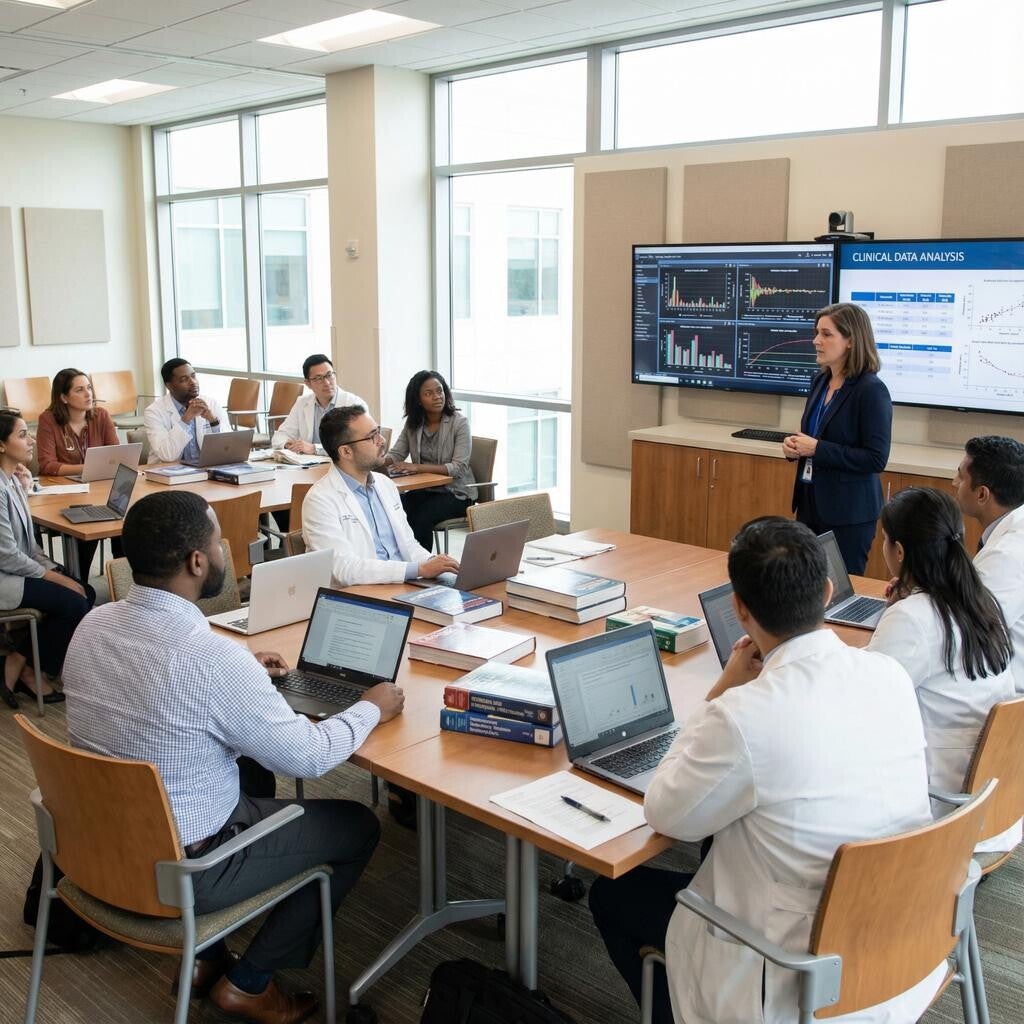
Practical Training & Research Activities
The programme combines theoretical knowledge with practical research activities designed to help learners apply research principles to realistic healthcare situations. Participants may undertake activities such as:
✓ Developing healthcare research questions, aims and objectives
✓ Conducting structured searches of scientific and healthcare literature
✓ Reviewing and critically appraising published research articles
✓ Comparing quantitative, qualitative and mixed-method research designs
✓ Developing questionnaires, interview guides and other data collection tools
✓ Practising sampling and participant-selection techniques using case scenarios
✓ Reviewing informed consent forms and research ethics scenarios
✓ Organising and interpreting sample research data
✓ Identifying bias, confounding factors and limitations within research studies
✓ Preparing tables, charts and summaries for research findings
✓ Writing key components of a healthcare research report
✓ Developing and presenting a structured healthcare research proposal
Assessment & Training Approach
The Medical Research Training programme uses a practical and learner-centred approach to develop both research knowledge and applied skills.
Learning Approach:
Training combines instructor-led teaching, guided research activities, case-based learning, literature review exercises, group discussions and independent study.
Practical Application:
Learners apply research concepts through activities such as developing research questions, evaluating published studies, designing data collection tools, interpreting sample data and developing research proposals.
Assessment:
Learner progress may be evaluated through knowledge checks, practical research exercises, case-based activities, written tasks, presentations and/or development of a research proposal.
Learning Resources:
Participants may work with research articles, scientific databases, sample datasets, research templates, case studies and other appropriate learning resources.
Training Delivery:
The programme may be delivered through classroom-based training and/or supported online learning according to the programme schedule and available delivery arrangements.
Who Should Enrol?
The Medical Research Training programme is suitable for individuals who want to develop or strengthen their knowledge and practical skills in healthcare research. It may be particularly relevant for:
✓ Nurses, doctors and allied healthcare professionals interested in research
✓ Healthcare professionals involved in clinical practice, quality improvement or evidence-based practice
✓ Graduates and students in health, medical and social care disciplines
✓ Healthcare educators and clinical instructors
✓ Professionals involved in healthcare administration, public health or health programmes
✓ Individuals preparing to undertake healthcare-related research projects
✓ Professionals who need stronger skills in literature review and critical appraisal
✓ Individuals interested in developing research proposals or contributing to research teams
✓ Healthcare professionals preparing for postgraduate study involving research
✓ Anyone seeking a structured introduction to medical and healthcare research
Course Information
Training Programme: Medical Research Training
Training Focus: Healthcare and Medical Research Methods
Learning Approach: Instructor-led teaching, guided exercises, case-based learning and practical research activities
Practical Components: Literature searching, critical appraisal, research design, data collection, data interpretation and research proposal development
Assessment: Knowledge checks, practical exercises, written activities, presentations and/or research proposal development
Delivery: Classroom-based and/or supported online learning, subject to programme schedule
Certificate: Certificate of Completion upon successful completion of the training
Location: Global Healthcare Hub, UAE
Ready to Strengthen Your Medical Research Skills?
Take the next step towards developing practical skills in healthcare research, critical appraisal and evidence-based practice. Contact Global Healthcare Hub today for information about upcoming training dates, enrolment requirements, delivery options and course availability.